Lidl announces commitment to Net-Zero by 2050
Date published: September 30, 2024
The supermarket retailer, which has 180 stores across Ireland, is significantly intensifying its commitment to sustainable business practices and climate mitigation as part of its international ‘A Better Tomorrow’ sustainability strategy.
Lidl is committed to net-zero by 2050 across all business units and supply chains.
To date, it has already recorded a 10% reduction in greenhouse gas emissions in Ireland (compared to 2019) as part of Lidl’s commitment to reduce operational emission by 46% by 2030. The company attributes this reduction to its use of 100 percent green electricity in each of its 180 stores across the region and its Regional Distribution Centres in Mullingar, Newbridge and Charleville since 2019, alongside a wide range of other sustainability initiatives.
Joining forces to reduce emissions
Lidl is now expanding its climate strategy to include new, concrete net-zero targets in its upstream and downstream value chain, otherwise known as Scope 3 emissions, where more than 90 percent of its total emissions are generated.
Targets include a 42.4 percent reduction in greenhouse gas emissions in agriculture, forestry and other land (FLAG emissions) and 35 percent reduction in its emissions in the energy and industry sector (E+I emissions) by 2034.
The company is also working closely with its strategic suppliers, who are responsible for 75 percent of product-related Scope 3 emissions, to set their own climate targets by 2026 in accordance with the Science Based Targets Initiative (SBTi) criteria – a global initiative that supports companies in setting science-based targets to reduce greenhouse gas emissions in line with the latest climate science.
Lidl is also supporting its suppliers to achieve these targets through its dedicated Supplier Engagement Programme, offering a wide range of assistance and training opportunities including enrolment in the Supplier Leadership on Climate Targets (LOCT) online academy.
Climate strategy milestones already achieved
- Lidl has been using 100 percent green electricity since 2018, contributing to Lidl’s global reduction of 52 percent of its operational CO2 emissions (Scope 1 & 2).
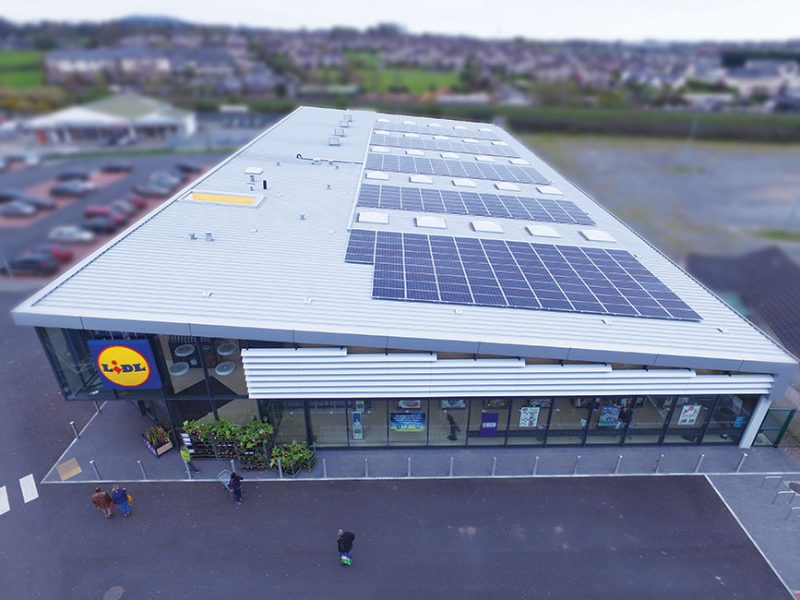
- Investment of more than €12 million on solar panel installation at over 85 stores in Ireland & Northern Ireland.
- Launch of Ireland’s first Beef Sustainability Programme in partnership with Bord Bia, Liffey Meats & Beef Farmers.
- €20 million investment in low Global Warming Potential refrigeration equipment since 2018.
- Installation of customer EV charging bays at 75 stores.
- Installation of Heat Pumps in 46 new stores.
- 11 largest suppliers onboarded onto a bespoke Supplier Engagement Programme designed to support suppliers in reducing their environmental impact.
- Installation of LED lighting in all stores.